A designer I mentored recently told me she was “scared” of programming. She thought learning code meant abandoning design. Starting over. Becoming a junior again.
I told her the opposite. Her design background is her biggest competitive advantage. She just doesn’t know it yet.
Two types of design engineers
There are two paths into design engineering:
The developer who learned to design. They started writing code, got frustrated with ugly UIs, picked up photography or typography as hobbies, and slowly developed an eye for what looks good. Now they design in code. Figma optional.
The designer who learned to code. They started in Figma, got tired of handing off specs and watching developers butcher their vision. Tired of the back-and-forth: “move it up,” “that’s not pixel-perfect,” “the spacing is off.” So they learned enough code to implement things themselves.
Both paths lead to the same place: someone who goes from idea to shipped product without depending on anyone.
The Shiara story
Shiara , a member of Crafter Station , was in the exact same position five months ago. Product designer, minimal code experience, scared to start.
She used to design interfaces in Figma and hand them off to me. But there came a point where I felt bad giving her feedback. She’d spend hours on a layout, the auto-layout, the colors, the spacing. And then I’d have to tell her “this doesn’t work.” I knew the effort behind it. It felt wrong.
So I told her: stop prototyping in Figma. Use v0 or any AI tool that generates UI from a prompt. Send me the link. Iterate there. My feedback becomes your next prompt. The loop is ten times faster.
That was the bridge. She started seeing code not as something foreign but as another design tool. She learned HTML, CSS, React. Five months later she works remotely for a foreign company as a design engineer. She builds her own components, ships her own features. Nobody tells her “the developer will implement it.”
She also runs Glitch Girls , a community of women making open source games. She’s won grants, published games, participates in game jams. All of that unlocked because she added code to her design skills.
Five months. That’s it.
Taste is what AI can’t replace
AI can generate code. AI can generate layouts. What AI cannot generate is taste.
Taste is not knowing something looks bad. Everyone knows when something looks bad. Taste is knowing why it looks bad and iterating until it looks right. Not “oh, that feels off” but “the vertical rhythm breaks here because the line-height doesn’t match the spacing scale.”
If you’re a designer, you’ve been training taste for years. That’s the hard part. Developers spend years trying to learn what you already know. The code is the easy part.
Emil Kowalski wrote the best breakdown of this concept I’ve found. How to develop it, how to practice it, how to turn it into a competitive advantage. If you read one thing after this post, make it this:

The web is Figma with code
This is the analogy that clicks for every designer I talk to.
Open a browser. Write some HTML. Save. See the result. Change a color, see it update. Move a div, see it move. Same feedback loop you already know from Figma, except now you control everything.
I always recommend starting with the web, even if you want to make games or mobile apps or something else entirely. The web has the fastest feedback loop. You see your changes instantly. No compilation step, no emulator, no build process. Just code and a browser.
Once you learn the fundamentals, you transfer them anywhere. Phaser for games. Remotion for video. React Native for mobile. The language is the same. Only the canvas changes.
Intersectional skills compound
Here’s the math nobody explains.
If you’re a graphic designer competing against other graphic designers, growth is linear. Everyone has the same skills. The market is crowded. You differentiate by being marginally better, which takes years.
But if you combine design + code, you’re no longer in the same pool. You’re in a much smaller, much more valuable category. The effect is exponential, not additive.
Design + code = you prototype your own ideas. Design + code = you don’t depend on a developer to ship. Design + code = you understand constraints that make your designs better. Design + code = companies pay a premium for people who bridge the gap.
Small skills compound over time. Learn a bit of animation. A bit of 3D with Blender. A bit of motion design. Each one makes your profile exponentially more attractive because the combination is rare.
Don’t vibe code without foundations
One warning. AI makes it tempting to skip the fundamentals. You prompt Cursor, something appears, it looks right, dopamine hits. You think: “why would I learn to code? I can just prompt.”
But you didn’t learn anything. And when it breaks, and it will break, you won’t know why. That frustration is worse than the initial learning curve because you thought you had it figured out.
Learn the basics first. Understand what a div is. Understand the box model. Understand how flexbox works. Then use AI to accelerate. The foundation is what makes the speed sustainable.
Where to start
1. Learn the fundamentals
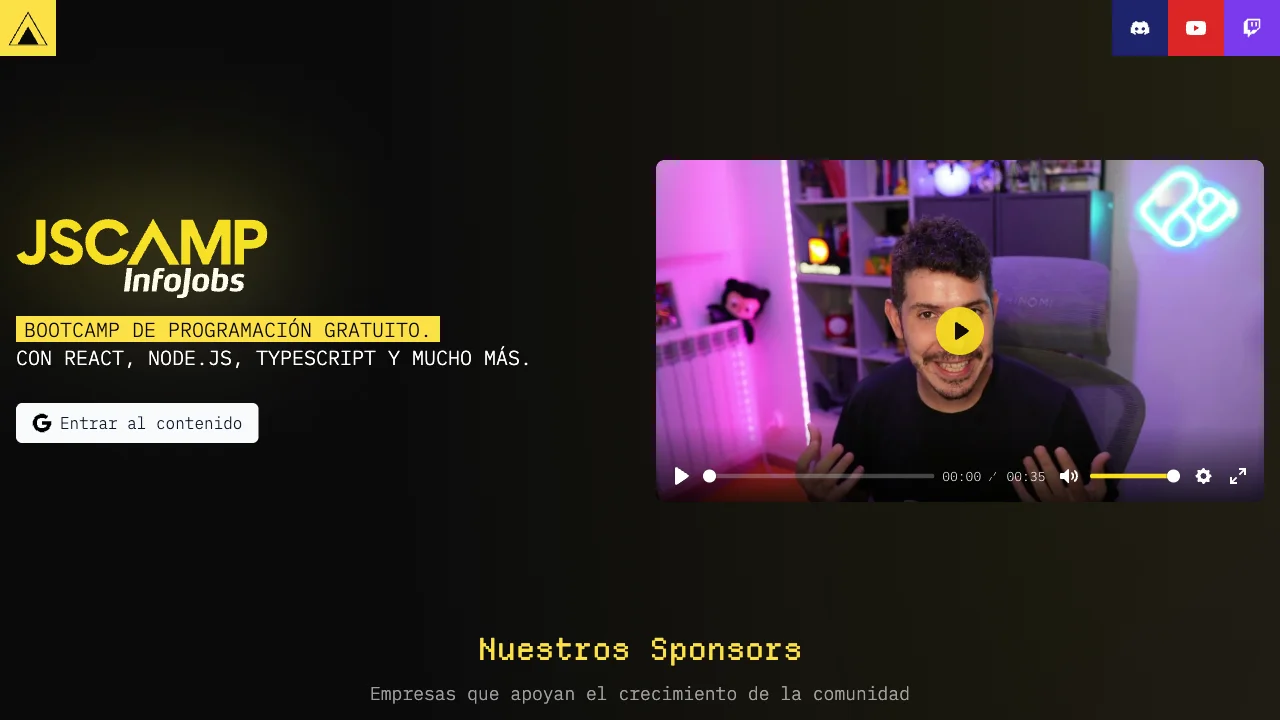
JSCamp.dev is a free bootcamp by midudev . Start with chapters 1-3: Intro, HTML/CSS, JavaScript. That’s enough to build your first page and understand how the web works.
2. Train your eye
Read Emil Kowalski’s “Developing Taste” . Understand why things look good, not just that they do. This is the skill that separates a design engineer from a developer who knows CSS.
3. Iterate with AI
Once you have the basics, use v0.dev to prototype fast. Your design eye + prompts = rapid iteration. The feedback loop is: design intent → prompt → result → refine. Designers are naturally better at this because they know what “good” looks like.
If this is you
If you’re a designer thinking about learning to code, you’re not starting from zero. You’re starting from a position of strength. Your eye, your sense of composition, your understanding of hierarchy and spacing, that’s what developers spend years trying to develop.
The only thing missing is the other half. And it takes less time than you think.
What Claudia said after our conversation
“This session gave me clarity and, above all, the confidence to venture beyond my career and explore programming as a complement to design. It helped me understand the value of building intersectional skills and lose the fear of stepping out of my comfort zone.” — Claudia García , Graphic Designer @ Wavys Technologies
Book a conversation and let’s figure out your path. I help designers, developers, and people in between. 30 minutes, free, no strings attached.